
Our goal in this section is to contribute to learning about the different uses of Requalify in research, especially in the areas of health and education. On this occasion, we will address the training of nurses and the inclusion of traditional indigenous medicine.
The article is accompanied by a brief reflective reading guide and corresponding commented answers, with the aim of guiding the analysis of the texts and broadening the understanding of the theme, the methodological choices, and the different possibilities for applying the Requalify software.
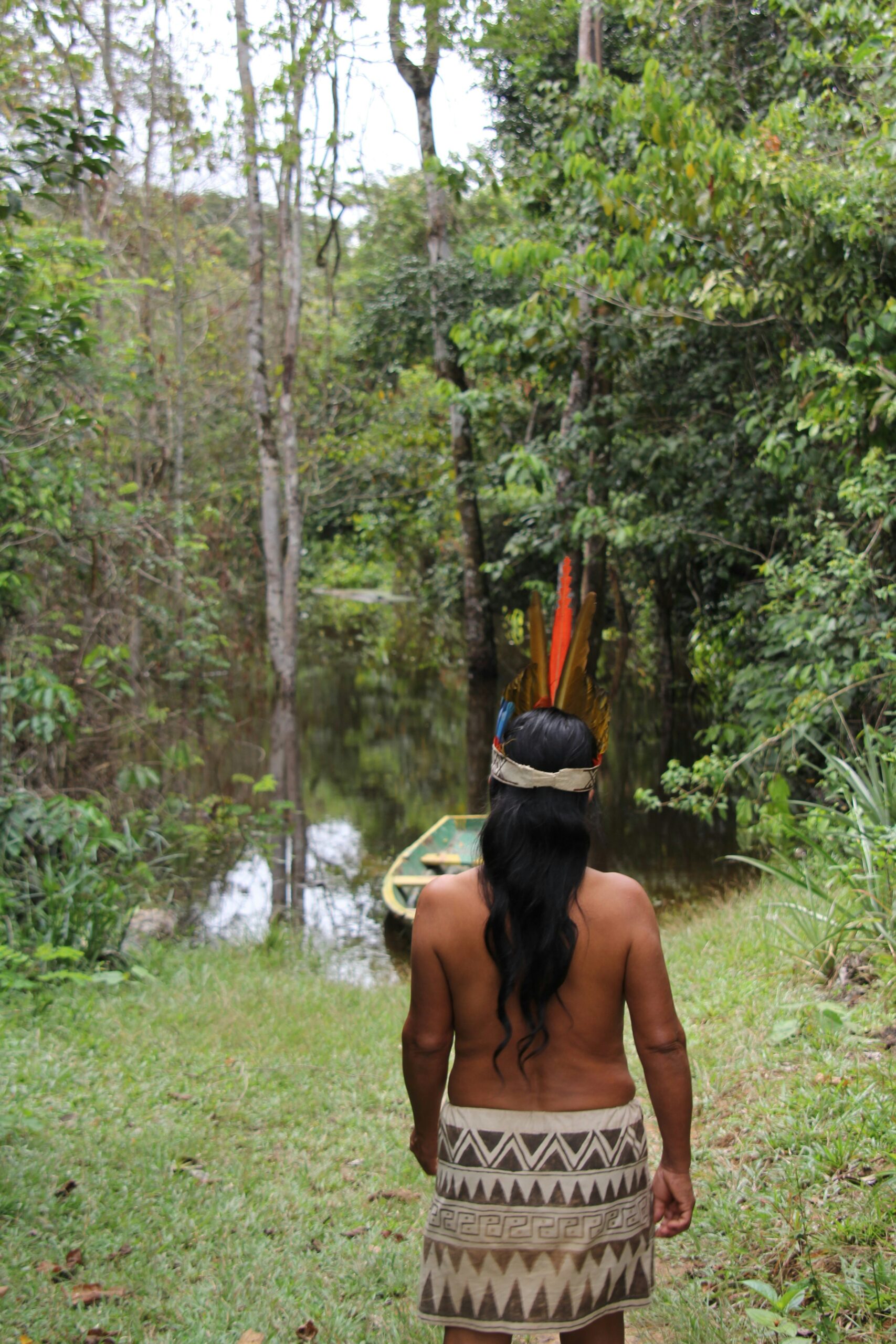
Nascimento, VF, Terças-Trettel, AC, Gregolin, CS, Rangel, AR, Carmo, HO, & Martins, MS (2025). Indigenous traditional medicine in the training of nurses and subsidies for advanced practices. Acta Paul Enferm., 38: 1-9. https://www.scielo.br/j/ape/a/sjxVvZqY4FL9f6CM43DktgD/?format=pdf&lang=pt
Summary
This qualitative, documentary study addresses traditional indigenous medicine and its contribution to the training of nurses in the state of Mato Grosso. The research was developed with the first class of the Indigenous Intercultural Nursing course at the State University of Mato Grosso (UNEMAT), based on the documentary collection produced during the activities carried out by the students. For data analysis, the authors used the Requalify software, organizing the results into three categories of analysis. The study makes it possible to understand the contributions of traditional indigenous medicine to nursing education, valuing the perspectives of indigenous students and traditional knowledge in the context of intercultural education.
Guide and Reflections on the Article
1. What is the research topic?
The research topic is the contribution of Traditional Indigenous Medicine (TIM) to the intercultural indigenous nursing course at the State University of Mato Grosso (UNEMAT). The study is justified by the fact that ITM is still addressed in a limited way in health-related courses, despite the social relevance of integrating traditional knowledge into health education.
Furthermore, there are services aimed at providing care to the indigenous community, such as the Indigenous Health Care Subsystem of the Unified Health System (SasiSUS), in which health professionals generally lack specific training to interact with traditional care practices. In this context, the World Health Organization (WHO) and the Pan American Health Organization recognize the importance of articulating knowledge from Western medicine with traditional knowledge, so that health professionals work together with the reference figures of indigenous communities, such as healers, midwives, shamans, among others.
The UNEMAT course stands out as the first university to incorporate traditional knowledge across the curriculum of the Intercultural Indigenous Nursing program. Likewise, the course features Indigenous professors and brings together students from diverse Indigenous ethnic groups in Brazil, strengthening an intercultural educational approach focused on recognizing and valuing traditional knowledge.
2. What are the objectives of the study?
The objective is to investigate the contributions of MTI (Multidisciplinary Teaching Methodology) in the training of nurses and its contribution to the development of more integrated health practices.
3. What is the methodological design of the study?
This is a qualitative, documentary-type, exploratory study. The study used a digital documentary collection from the first group of students, specifically the first activity carried out by the indigenous students on the topic of Traditional Medicine. Two students with prior academic training were excluded. Furthermore, the selected period was March and April 2024, as this is the intermediate period in which students carry out activities in the communities under faculty supervision.
Specifically, the data mentioned was collected online in November 2024 by a team member with experience in documentary research.
4. How did the authors analyze the data produced?
The data analysis was performed using thematic analysis with the aid of the Requalify software. Initially, the process involved creating a database from downloading the course activities in online format. Subsequently, the transcripts were entered into the software platform, which identified and organized the information into themes or units of meaning. This process was based on identifying the frequency of themes and the semantic grouping of the content.
It is important to highlight that the researchers critically reviewed the results proposed by the software, which led them to redefine some themes and develop new categories of analysis of a deductive nature, based on the theoretical framework of the MTI approach. Therefore, the analytical process combined the automated work of the software with the interpretative work of the researchers.
Finally, it is important to mention that, after analyzing the data, the research shared the results with the participants so that they could evaluate them, although they did not indicate any changes in the results. This procedure in qualitative research is fundamentally ethical, since the participants are collaborators during the research process, their discourses are used, and inferences are made about a given phenomenon; therefore, they can have access to and approve the publication of these conclusions (Minayo & Guerriero, 2013).
In turn, the study, because it involved human beings and the indigenous population, obtained approval from the ethics committee.
5. What are the main results or categories found?
The article reports that 48 indigenous students participated, 751 of whom were male and 491 aged between 36 and 50 years. Three categories of analysis were developed: cultural appreciation and potential of MTI (Indigenous Traditional Medicine), academic training in intercultural nursing, and contributions of MTI to the professional practice of nurses.
The results section was initially organized with the presentation of the conclusions at an interpretive level and then supplemented with excerpts from the empirical data, that is, from the interview that exemplifies such interpretation.
Cultural appreciation and potential of MTI
Traditional Chinese Medicine (TCM) is part of the community's culture and therefore its daily life; this is why its inclusion in the training course is so important. Furthermore, it allows for the valuing of this traditional knowledge and, when discussed in an academic context, enables its continuity and implementation to broaden the practices of professionals.
Regarding the potential of Traditional Indigenous Medicine (TIM), it is observed that its practice presents low risk and can be implemented in locations with limited access to health services, since it involves effective and safe practices; allowing for coordination with representatives of the indigenous community.
Intercultural academic nursing education
The aforementioned category concludes that students believe that training in MTI contributes to the promotion of different knowledge in the health field, which empowers them when making decisions about the most appropriate therapeutic methods.
Contributions of MTI to the professional practice of nurses
In this last category, participants consider that the contents of MTI (Medical-Indigenous Training) allow for a comprehensive training of nurses, who can use these tools in different cases and types of diseases. Similarly, the importance of including these contents is discussed, since they allow nurses to work in indigenous communities. In this way, it becomes possible to develop positive relationships with their members and establish trust, which is a central aspect of health care.
6. What limitations of the study were identified by the researchers?
Firstly, one of the limitations presented is the language barrier, since Portuguese is not their native language. In addition, there may have been some resistance to reporting situations that would highlight the weakening of cultural practices.
GETTING TO KNOW THE AUTHORS
Vagner Ferreira do Nascimento
Graduated in Nursing and Obstetrics from the Federal University of Mato Grosso (UFMT-2008). PhD in Bioethics – CUSC/SP (2018). Currently, Adjunct Professor V at the State University of Mato Grosso (UNEMAT). (Information from the Lattes curriculum) http://lattes.cnpq.br/4134268880865735).
Ana Cláudia Pereira Tuesdays
Nurse graduated from the University for the Development of the State and Region of Pantanal (2005). Master's degree in Public Health from the Federal University of Mato Grosso (UFMT) (2011). PhD in Tropical Medicine from IOC/FIOCRUZ (2016). Adjunct Professor and coordinator of the Intercultural Indigenous Nursing course at the State University of Mato Grosso (UNEMAT) since 2023. Permanent Professor of the strictu sensu Postgraduate Program in Public Health at the Federal University of Mato Grosso (UFMT), Cuiabá campus. (Information from the Lattes curriculum) http://lattes.cnpq.br/9144280121462086).
Cristina Schmitt Gregolin
Bachelor's degree in Nursing from the Federal University of Mato Grosso (2016). Master's degree in Health Sciences from the same institution in 2020. (Information from the Lattes curriculum) http://lattes.cnpq.br/0992190383727174).
Ana Raquel Florindo Mateus Rangel
Hercules de Oliveira Carmo
Professor Doctor I in Full-Time Dedication to Teaching and Research (RDIDP), at the Department of Professional Guidance (ENO) of the School of Nursing of the University of São Paulo (EEUSP). Permanent Faculty Member of the Postgraduate Program in Nursing Management (PPGEn). PhD in Sciences from PPGEn at EEUSP, Master's in Health and Hospital Technology (UNIRIO). Graduated in Nursing from the Teresa d'Ávila University Center (UNIFATEA). (Information from the Lattes curriculum) http://lattes.cnpq.br/1215968745520641).
Maristela Santini Martins
Professor with a PhD in the Department of Professional Guidance (ENO) at the School of Nursing, University of São Paulo (EEUSP), under a Full-Time Dedication to Teaching and Research (RDIDP) regime. PhD in Sciences from the PPGEn program at EEUSP, 2015. Master's degree in Nursing from the Postgraduate Program in Nursing (PPGE) at EEUSP, 2008. Bachelor's degree in Nursing from the Adventist University Center of São Paulo, 2002. (Information from the Lattes curriculum) http://lattes.cnpq.br/9571473474329827).
Reference
Minayo, MCS, & Guerriero, ICZ (2014). Reflexivity as an ethos of qualitative research. Science & Collective Health, 19(4):1103-1112. https://www.scielo.br/j/csc/a/DgfNdVrZzZbN7rKTSQ8v4qR/?format=html&lang=pt